
Garage Door Maintenance & Tune-Ups
Most garage door failures announce themselves quietly first — a new noise, a heavier door, a slower cycle. A tune-up catches that wear while it is still an adjustment instead of a replacement, and every visit ends with the full system checked, not just the noisy part.
Signs a tune-up is due
New rattles, squeaks, or grinding usually mean dry or worn rollers and hinges — the cheapest things to fix, and the most expensive to ignore.
A door that no longer stays put when you lift it by hand has lost balance. The opener then carries weight it was never meant to lift.
Uneven movement points to friction, worn hardware, or a door that is no longer running square in its tracks.
You inherited the door's whole history without any of the records. A tune-up establishes what you actually own.
Springs, cables, and opener settings drift out of specification slowly enough that you stop noticing. A system check catches the drift before it becomes a failure.
A system check, not a squirt of lubricant.
The door gets balance-tested by hand, because a door that does not hold its own weight wears out everything attached to it. Rollers, hinges, and bearing plates are lubricated, tracks cleaned — cleaned, not greased, because lubricant in a track just collects grit. Hinge and bracket hardware is checked and torqued, cables inspected for the fraying that starts at the drum, and the opener's travel limits and force settings verified against the door as it actually is.
The visit finishes with the 12-Point Precision Check, including photo-eye alignment and the auto-reverse test — the two features that only matter on the day something goes wrong.
Then you get the findings in plain language: what is fine, what to watch, and what — if anything — needs repairing. Anything beyond the tune-up is quoted before work begins, and “leave it, it is fine” is a legitimate outcome of the visit.
Common questions
How often should a garage door be serviced?
There is no single rule, because the honest variable is cycles — how many times a day the door opens and closes. For a door in ordinary daily use, a yearly tune-up is a sensible rhythm. A door that serves as the household's main entrance, opened many times a day, earns more frequent attention. If you would rather not track it, book one when the door starts sounding or moving differently.
What is the difference between a tune-up and a repair?
A tune-up is inspection, cleaning, lubrication, and adjustment of parts that are still working. A repair replaces something that has failed. A tune-up sometimes uncovers a repair — a frayed cable, a spring nearing the end of its life — and when that happens you get a clear explanation and a quote before any repair work begins. Finding a problem is not permission to fix it.
Do you lubricate the tracks?
No — tracks get cleaned, not greased. Lubricant inside the track collects grit and turns into an abrasive paste. The lubricant goes where metal actually moves against metal: rollers, hinges, and bearing plates, with a light coat on the spring coils to reduce corrosion and noise.
Is there any maintenance I can safely do myself?
Yes: keep the tracks free of debris, keep the photo-eye sensors clean and aligned, and listen. You know what your door normally sounds like better than anyone, and a change in sound is the earliest warning you will get. What stays off the homeowner list is anything involving spring tension or cables — those hold the door's weight, and adjusting them is not a DIY job.
How long does a tune-up take?
A single-door tune-up is typically well under an hour on site, including the full system check and a walkthrough of anything we found. If the visit turns up a repair you approve, that adds time depending on the part.
The components a tune-up covers
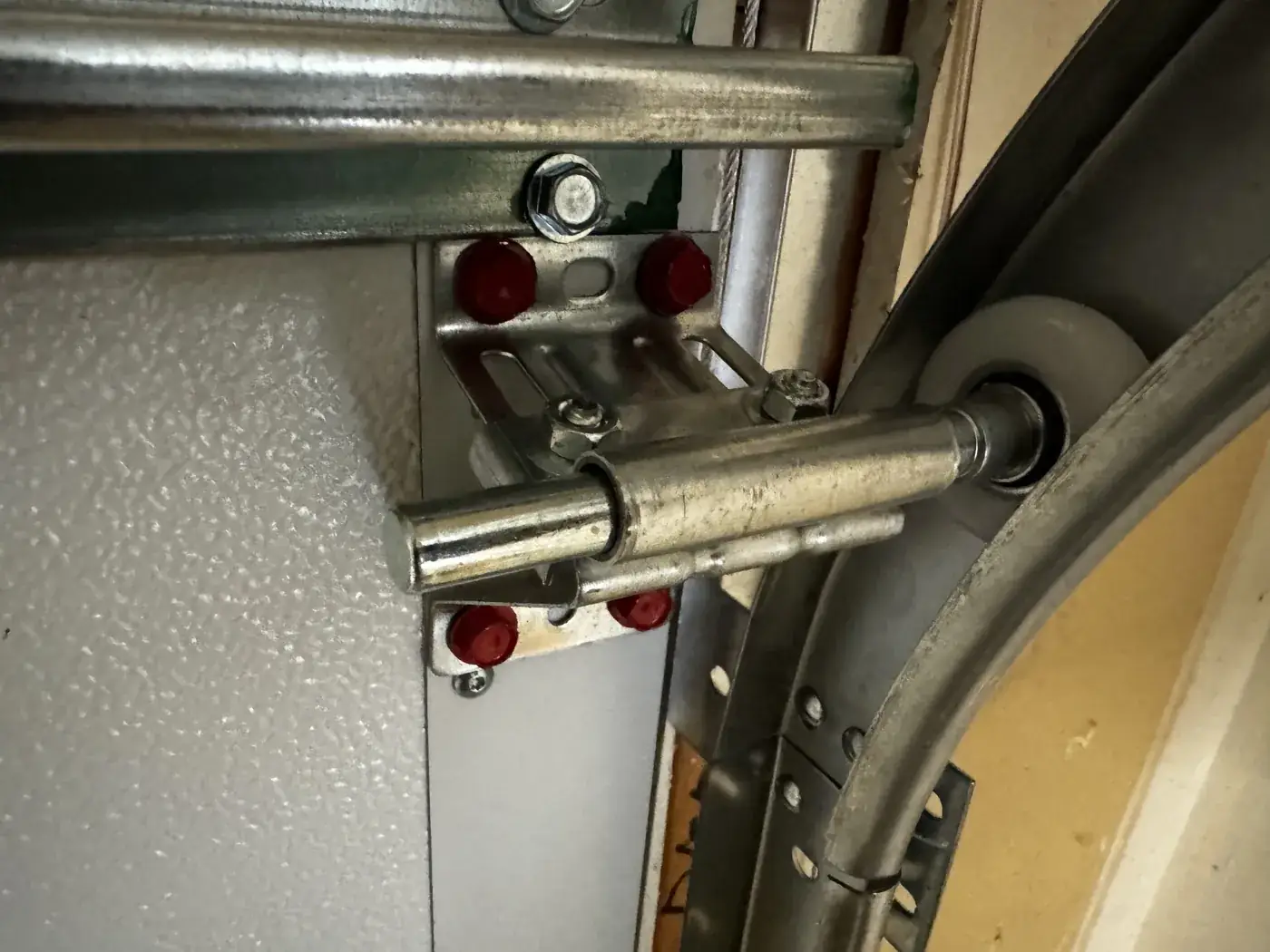
Roller and hinge bracket at the track 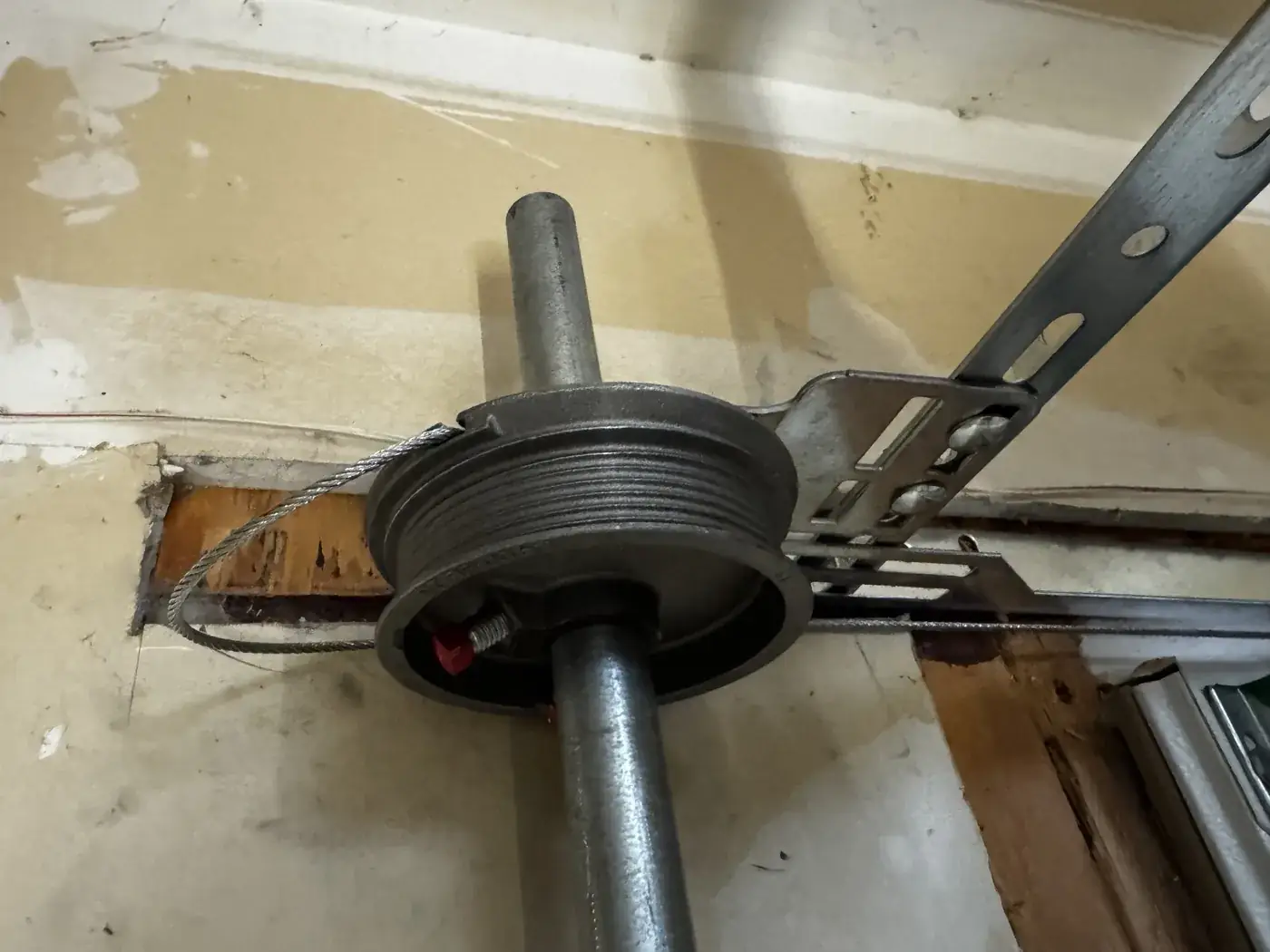
Cable seated and wound on the drum
Start at Square One.
Tell us what your garage door is doing. You do not need to diagnose it before you call.